The Shift in Training Priorities Driven by AI
Artificial intelligence is fundamentally altering the landscape of cybersecurity training, pushing healthcare organizations to rethink their educational priorities. Traditional training programs that focused on static compliance modules are being replaced by dynamic, AI informed approaches that address evolving threats like AI driven phishing attacks and adversarial prompts. For healthcare institutions, this shift is critical as attackers increasingly use generative AI to craft convincing emails targeting hospital staff, exploiting the human factor in clinical environments.
As AI tools become more accessible, the nature of cyber threats in healthcare is changing. Attackers can now generate realistic messages that mimic internal communications or patient inquiries, increasing the likelihood of successful breaches. This demands that healthcare security teams move beyond basic awareness training to adopt continuous, scenario based learning that helps clinicians and administrative staff recognize AI generated social engineering tactics.
Implications for Hospital Security and Compliance
For hospital CISOs and health IT directors, the integration of AI into training programs requires a strategic update to security awareness curricula. Training must now cover how AI can be used to bypass traditional email filters and how to identify subtle cues in AI generated messages. This is particularly relevant for protecting electronic protected health information (ePHI) under HIPAA, as a single successful phishing attack could expose patient records and lead to significant regulatory penalties.
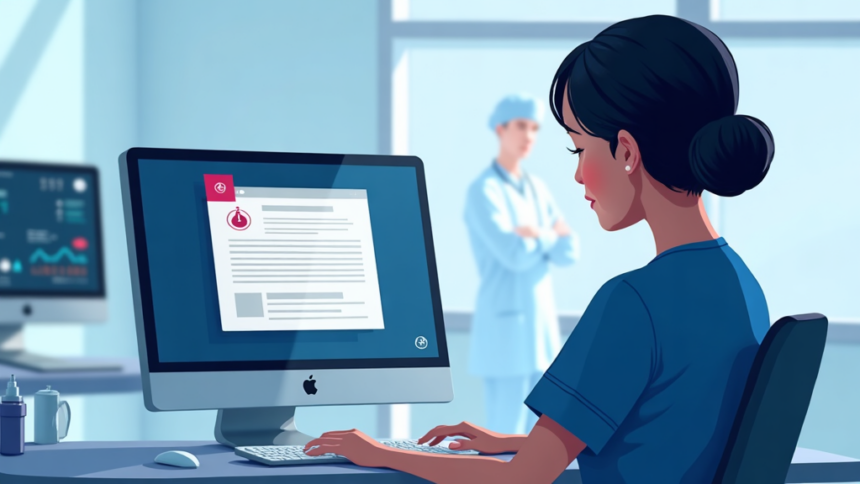
Moreover, healthcare organizations should leverage AI themselves to enhance training. AI powered platforms can simulate real world attack scenarios tailored to specific roles, such as a nurse handling patient data or a billing specialist processing insurance claims. These simulations help staff practice threat response in a safe environment while providing security teams with data on vulnerabilities to address in future training. To stay effective, healthcare CISOs must update their training strategies regularly to counter the rapid evolution of AI threats.
What This Means for Healthcare Organizations
Beyond technical training, the rise of AI in cybersecurity education has broader implications for healthcare operations. AI can help automate the personalization of training modules, ensuring that each employee receives relevant content based on their access levels and past performance. This reduces the administrative burden on understaffed IT departments at hospitals and health systems. It also enables faster remediation of risky behaviors, such as clicking on suspicious links, by delivering immediate micro lessons.
However, healthcare leaders must also address the risks of AI itself in training environments. If an AI training tool is compromised, it could expose sensitive employee data or provide incorrect guidance. Therefore, any AI based training platform used in a healthcare setting should undergo rigorous security vetting to ensure compliance with HIPAA and other data protection standards. By combining AI driven training with traditional human oversight, healthcare organizations can build a more resilient workforce prepared for the next generation of cyber threats.
Source: Healthcareinfosecurity