Federal agencies warned hospitals and public health organizations that temperature controllers and cold chain monitoring systems are being attacked, days after a European wave pushed supermarket refrigeration toward dangerous heat.
Blood products came close to loss
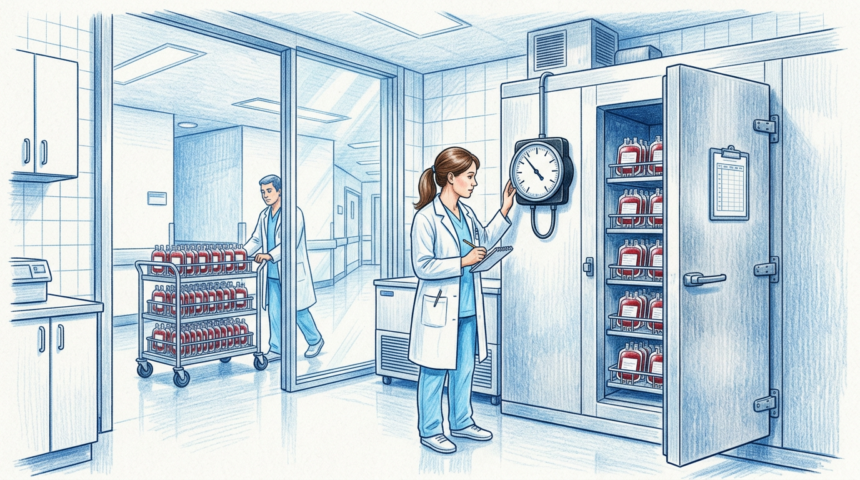
In one altered configuration, cooling parameters would have driven temperatures to 302 degrees Fahrenheit had staff not caught it. The French blood bank EFS, which supplies blood products to healthcare and manufacturing facilities, recorded a severe rise in cold storage rooms holding units awaiting distribution. Workers corrected the settings before products were destroyed.
Investigators found remote access was frequently gained using manufacturer default credentials on internet-reachable controllers. The joint advisory from the FBI, CISA, and HHS does not attribute the campaign, and analyses noting bulletproof hosting also used by Russia-linked operations do not establish state involvement.
Where clinical risk actually sits
Hospital pharmacy refrigerators, blood banks, tissue banks, and lab reagent storage all depend on networked temperature monitoring. A spoofed sensor reading is worse than a dead one: staff see a normal number while inventory warms. Settings changes can also create compressor faults and fire hazards.
The mitigations the advisory lists are unglamorous and finishable this quarter. Get controllers off the public internet and behind a mediated remote access path. Replace default passwords everywhere they remain. Patch what the vendor still supports, and retire devices whose manufacturer no longer ships firmware. Then verify that alerting for excursion thresholds reaches an on-call human rather than a shared inbox.
Cold chain incidents rarely appear in breach filings because no record is stolen. They surface instead as spoilage, rescheduled transfusions, and inventory the supply chain cannot replace quickly.