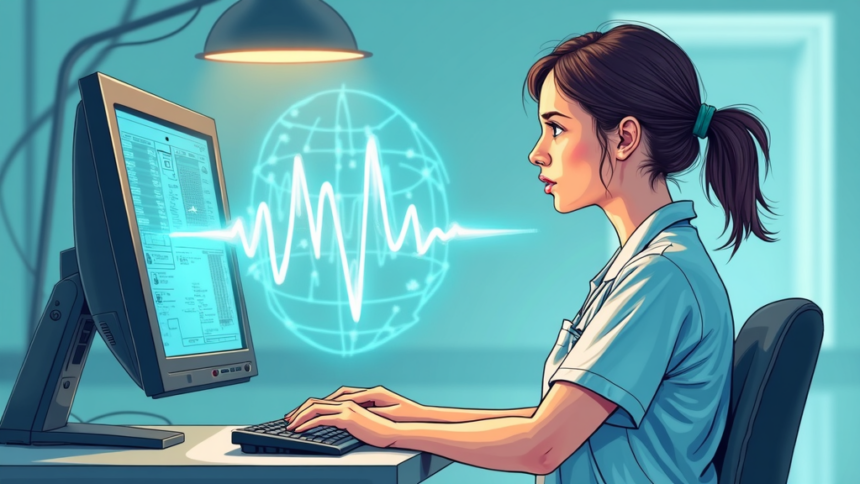
The Rise of AI Generated Voice Cloning in Healthcare
Cybercriminals are increasingly using advanced artificial intelligence to clone the voices of executives, doctors, and IT administrators. These deepfake audio attacks are being deployed to trick hospital staff into authorizing fraudulent wire transfers, sharing patient data, or granting remote system access. The technology requires only a short audio sample, often sourced from public presentations or voicemail greetings, to create a convincing impersonation in real time.
Security researchers have documented a significant rise in these social engineering campaigns specifically targeting healthcare organizations. Attackers exploit high pressure environments where staff are trained to follow urgent instructions from perceived superiors. The ability to mimic a chief medical officer or chief financial officer with high accuracy makes these attacks particularly dangerous for hospital operations and patient data security.
What This Means for Healthcare Security Teams
For hospital CISOs and health IT directors, this new attack vector requires immediate policy updates. Voice based authentication protocols, such as verbally confirming wire transfers or system changes, are no longer sufficient. Healthcare organizations must implement secondary verification methods, such as a call back to a known number, a separate secure messaging channel, or a pre established code word.
Patient safety is directly threatened when attackers use deepfake audio to manipulate clinical staff. For example, a cloned voice of a department head could order a change in medication dosage or redirect a lab result. These scenarios create risks for health data integrity (ePHI) and patient outcomes. Healthcare compliance officers should review HIPAA security risk assessments to include voice based social engineering as a new threat vector requiring administrative and technical safeguards.
Immediate Steps for Health Systems
Key mitigation strategies include mandatory security awareness training focused on deepfake audio, updating incident response playbooks to include voice impersonation scenarios, and deploying detection tools that analyze voice anomalies during sensitive transactions. Healthcare organizations should also establish strict financial controls that require multi person authorization for any fund transfer exceeding a low threshold, regardless of the perceived urgency from a cloned voice.
Industry collaboration is essential. Hospital CISOs should share indicators of compromise and attack patterns through health information sharing and analysis centers (HISACs). As the arms race between generative AI and security defenses accelerates, proactive defense is the only reliable approach to protect hospital finances, patient privacy, and clinical safety.