
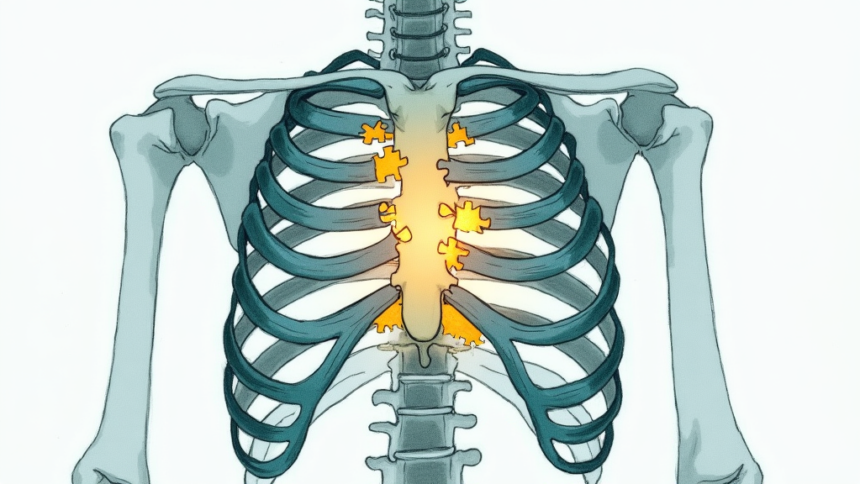
The Vulnerability of Medical Imaging Systems
Medical imaging systems, including PACS (Picture Archiving and Communication Systems) that store X-rays, CT scans, and MRIs, have long been identified as weak points in healthcare cybersecurity. Many of these systems rely on legacy protocols never designed for internet exposure, making them attractive targets for attackers. A recent high profile incident like the 2024 Synnovis ransomware attack, which cost the NHS approximately £30 million and disrupted pathology services, highlights the urgent need for stronger protections.
Computer scientists at the University of East Anglia (UEA) have developed a breakthrough approach to encrypting medical images using chaos theory mathematics. Published in the Wiley Journal of Computational and Mathematical Methods, the method aims to keep medical images secure even if hospital networks are fully breached by attackers.
How Chaos Theory Encryption Works
Chaos theory describes systems that follow simple rules but react strongly to tiny changes, producing outcomes that appear completely random. This is known as the “Butterfly Effect.” The encryption method exploits this extreme sensitivity to initial conditions. It uses several advanced techniques: S-Boxes (special substitution tables that change each time, preventing attackers from relying on fixed patterns), Galois Field arithmetic (a mathematical system used in cryptography to mix and transform image data), and XNOR diffusion (a process that blends pixel data with neighbors so tiny changes ripple across the entire image).
The method is designed to make each protected image uniquely unpredictable and extremely difficult to decrypt without the correct key.
Implications for Hospital Security Teams
The researchers specifically engineered the method for NHS environments, achieving encryption and decryption times of approximately two to four seconds. This is fast enough for real time clinical use, a major limitation of previous approaches. The method integrates with existing PACS and imaging systems, works across multiple image types including X-rays and MRIs, is lightweight enough for hospital servers, and can handle high volume environments such as emergency radiology.
The team is now preparing pilot deployments with NHS partners to assess real world performance across different hospital setups, evaluate the impact on radiology workflows, and explore integration with national cybersecurity guidance. The approach is designed to complement existing cybersecurity measures, adding an extra layer of protection to some of the most sensitive data healthcare organizations hold: medical images. For hospital CISOs and health IT directors, this represents a significant advance in medical data protection, addressing a vulnerability that has long been known but inadequately addressed across healthcare systems worldwide.
Source: Healthcare in Europe