The rapid adoption of artificial intelligence agents in healthcare is creating a security dilemma where traditional deterministic software models no longer apply. Unlike classic software that performs exactly as defined, AI applications introduce unpredictability that expands the potential blast radius for healthcare organizations. Niv Braun, co-founder and CEO at Noma Security, argues that defending these systems requires a new approach built on holistic frameworks and deep contextualization.
The Challenge of AI Unpredictability for Health Systems
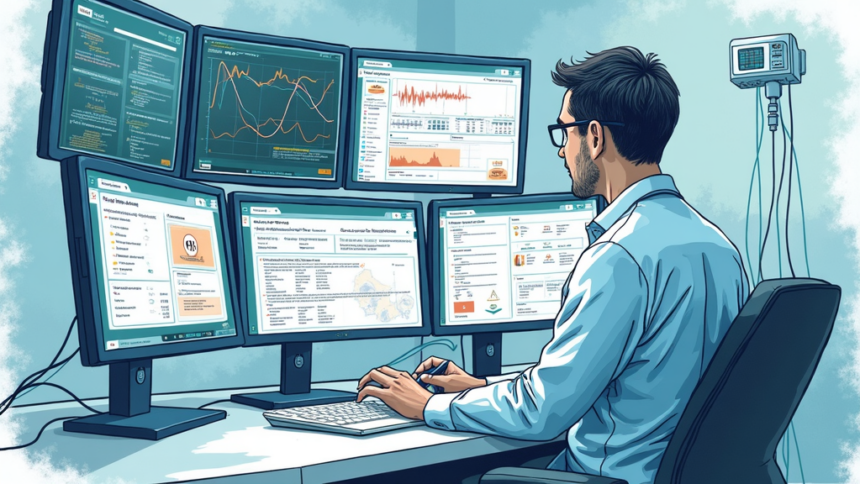
Healthcare organizations deploying AI for diagnostics, patient triage, or administrative workflows face a fundamental break from conventional software security. AI agents operate non deterministically, meaning their actions cannot be fully anticipated during development. For a hospital security operations center, this unpredictability creates gaps in posture management, access control, and runtime monitoring. Braun emphasizes that security teams must connect these three areas into a unified signal rather than treating them as isolated point solutions.
What This Means for Hospital Security Teams
For healthcare CISOs and compliance officers, the stakes are uniquely high. AI systems that interact with electronic health records or medical devices could expose protected health information or disrupt clinical operations if exploited. Braun states that without runtime visibility, security teams cannot provide accurate configuration recommendations or define appropriate agent access. This is particularly critical in healthcare where regulatory frameworks like HIPAA and FDA guidance require demonstrable controls over data access and system behavior. A unified AI security platform, rather than siloed point products, allows health systems to distinguish legitimate agent actions from real threats while maintaining compliance.
Bridging Context and Compliance in Healthcare AI
The pressure to deploy AI quickly in healthcare settings must not outpace security controls. Braun’s framework advocates for early partnerships between AI providers and security vendors to enable secure by design capabilities. For a hospital network, this means embedding security into AI development pipelines from the start, ensuring that MCP and other fast moving technologies are absorbed into a flexible security posture. The goal is to create a feedback loop where runtime monitoring informs access policies and configuration recommendations, enabling healthcare organizations to innovate without exposing patients or data to unnecessary risk.
Source: Healthcareinfosecurity