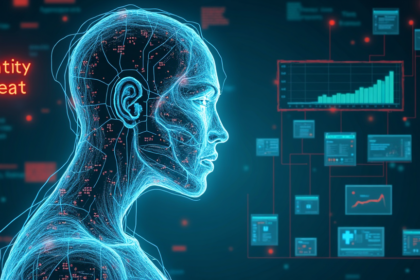

The Shift Towards AI-Driven Security Operations
Modern Security Operations Centers (SOCs) are under immense pressure as attackers increasingly leverage automation and artificial intelligence. Organizations like Tenex and Radicl are securing significant funding (Tenex raised $250 million in Series B, Radicl secured $31 million in Series A) to develop autonomous platforms that promise faster detection, automated response, and reduced attacker dwell time. These platforms aim to improve alert coverage while keeping human analysts involved for complex decision making. Experts from Team8 and Booking Holdings emphasize that AI is essential for boosting analyst effectiveness and achieving machine speed defense, though human oversight remains critical for high stakes situations.
Key Challenges and Strategic Solutions
Security leaders continue to struggle with alert noise, visibility gaps, and staffing shortages. The Cyderes 2025 SecOps Benchmark Report reveals that high performing teams differ from their peers by shifting from reactive response to proactive risk reduction. One emerging solution is cyber deception, as explained by Walmart Global Tech’s Tim Pappa, which provides high fidelity alerts based on observed attacker behavior rather than false positives. Additionally, the 2026 Unit 42 Global Incident Response Report highlights that legacy SIEM tools are no longer sufficient because threat actors now use AI to accelerate the entire attack lifecycle, leaving traditional SOCs hampered by disconnected workflows.
The Race for AI Cyber Leadership
Two frontier AI leaders, Anthropic and OpenAI, are taking sharply different approaches to introducing new models that could reshape vulnerability detection and remediation. Analysts predict the winner will be the company that excels at both innovation and security alignment. Former Microsoft CIO Jim DuBois warns that misaligned incentives between security and innovation teams create conflict, but fixing this friction allows organizations to move fast without sacrificing security. As AI reshapes the SOC landscape, the ability to operationalize security without creating new risk or brittle automation will define the next generation of cyber defense.
Source: Healthcareinfosecurity