
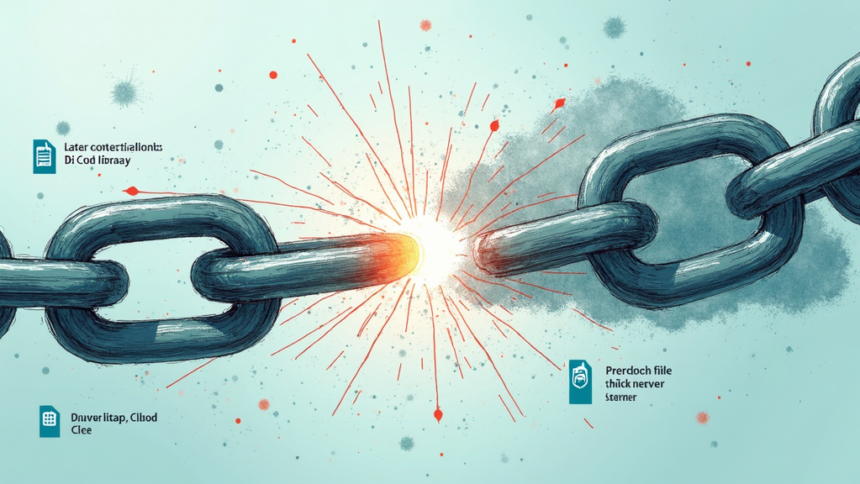
The Escalating Threat from Software Supply Chains
The software supply chain has become a prime target for attackers, with incidents like the backdooring of the popular JavaScript library Axios demonstrating the potential for widespread impact. These attacks, often linked to state sponsored groups, exploit the trust inherent in open source dependencies and automated development pipelines. Experts now recommend that developers introduce a deliberate delay before merging new repositories, as malicious code inserted into widely used libraries is often identified and reported within hours or days by the vigilant open source community.
Healthcare Sector Faces Unique Third Party AI Pressures
The healthcare and public health sector is grappling with a surge in cyber risks stemming from the integration of third party AI vendors. The Health Sector Coordinating Council (HSCC) has released specific guidance to help organizations manage this explosion of vendor risk. As AI becomes embedded in everything from medical imaging software to electronic health records, traditional governance models are proving inadequate. Incidents like the breach at EHR vendor CareCloud, which disrupted services and accessed patient environments, underscore the critical need for robust vendor oversight and incident response plans tailored to the unique data sensitivity in healthcare.
Addressing Gaps in Visibility and Governance
Organizations are increasingly recognizing that their focus on software security has left hardware based supply chain threats underexplored, exposing deeper systemic risks. Meanwhile, the rise of AI assisted development and the expansion of developer tools into browser and IDE extensions, as seen in the acquisition of Secure Annex by Socket, create new blind spots. CISOs are pushing for better policy enforcement, real time package risk analysis, and improved asset visibility. The convergence of geopolitical instability with the digital realm further complicates the landscape, as state sponsored hacktivists increasingly target critical infrastructure, making a comprehensive third party risk management strategy essential for all sectors.
Source: Healthcareinfosecurity