MedRisk
  • Home
  • News
    NewsShow More
    North Korean Hackers Target Android Game Apps in Espionage Campaign

    ESET researchers identified a ScarCruft supply-chain attack compromising Android game apps to…

    May 12, 2026
    Phishing Attacks Exploit Behavioral Tactics and AI as Healthcare Sector Faces Rising Threats

    Healthcare organizations face escalating phishing threats as cybercriminals leverage AI and behavioral…

    May 12, 2026
    Context and Runtime Visibility Are Key to Securing AI in Healthcare

    Healthcare CISOs must adopt a unified AI security platform that connects posture…

    May 13, 2026
    New AI System ARuleCon Automates Tricky SIEM Rule Migrations

    The AI system ARuleCon successfully converts SIEM detection rules across platforms, achieving…

    May 12, 2026
    Cloud Security at a Crossroads: AI Tools Outpace Defenses, New Research Warns

    New research reveals that AI tools are reshaping cloud environments faster than…

    May 12, 2026
  • Articles
    ArticlesShow More
    Modernizing Healthcare SOCs: AI, Automation, and Managed Detection in a Threat Landscape of Shrinking Windows

    Hospitals must accelerate vulnerability remediation from weeks to hours as AI driven…

    May 13, 2026
    How AI Agents and Shadow APIs Are Expanding the Healthcare Attack Surface

    Agentic AI and shadow APIs are creating new attack vectors that bypass…

    May 12, 2026
    Context Is the Missing Ingredient in Healthcare AI Security

    For hospital security teams, distinguishing a legitimate night shift login from a…

    May 12, 2026
    When AI Clones Your Colleagues: Safeguarding Healthcare Identity Against Deepfakes

    As AI-generated deepfakes become indistinguishable from real healthcare professionals, hospitals must deploy…

    May 12, 2026
    Accelerating Hospital SecOps with AI Driven Automation

    Palo Alto Networks Cortex XDR offers healthcare CISOs an AI driven platform…

    May 12, 2026
  • Features
    FeaturesShow More
    FTC Warns Tech Giants Against Weakening Encryption or Enabling Censorship

    The agency cautions leading U.S. tech companies that complying with foreign demands…

    May 4, 2026
    McLaren Health Care Confirms Ransomware Attack Affecting 740,000 Patients in Michigan

    The provider has disclosed a ransomware attack that compromised the personal and…

    May 4, 2026
    EU Allocates €145.5M to Boost Cybersecurity in Healthcare and SMEs, Launches Dual Funding Calls

    The European Commission is investing €145.5 million to strengthen cybersecurity across public…

    May 4, 2026
    US Congress Unveils Bipartisan Healthcare Cybersecurity Bill to Combat Rising Data Breaches

    US lawmakers have introduced the Healthcare Cybersecurity Bill to strengthen federal coordination…

    May 4, 2026
    Lawsuit Filed as Covenant Health Grapples with Cyber Attack Fallout

    Covenant Health is under legal fire after a cyberattack disrupted hospital operations…

    May 4, 2026
  • Spotlight
    SpotlightShow More
    Legacy Sitecore Flaw Exploited in Healthcare Environments to Deploy WeepSteel Malware

    Mandiant warns that outdated Sitecore configurations in healthcare systems could expose sensitive…

    May 4, 2026
    Three Healthcare Organizations Disclose Major Data Breaches Impacting Over 175,000 Patients

    Recent breaches at CPAP Medical Supplies, a Miracle Ear franchisee, and a…

    May 4, 2026
    Stealthy Prompt Injection in Images Lets Attackers Hijack AI Systems

    Researchers have discovered a method for hiding malicious instructions in images that…

    May 4, 2026
    Transparent Tribe Targets Indian Government With Malicious Desktop Shortcut Files

    The Pakistani-linked APT36 group has expanded its tactics by weaponizing Linux BOSS…

    May 4, 2026
    FTC Warns Tech Giants Against Weakening Encryption or Enabling Censorship

    The agency cautions leading U.S. tech companies that complying with foreign demands…

    May 4, 2026
  • About
    • Mission
    • Services
    • Contact
  • Alerts
  • AI Risk
  • Compliance & Legal
  • Cryptography
  • CVEs
  • Data Breaches
  • Malware
  • OT/ICS
  • Phishing
  • Privacy
  • Ransomware
  • Social Engineering
  • Startups
  • Threats
MedRiskMedRisk
Font ResizerAa
  • Home
  • News
  • Articles
  • Features
  • Spotlight
  • Events
Search
  • Quick Links
    • Home
    • News
    • Articles
    • Features
    • Spotlight
  • About MedRisk
    • Mission
    • Services
    • Contact
Have an existing account? Sign In
Follow US
© 2026 MedRisk. All Rights Reserved.
News

The Erosion of SMS Security: Why One-Time Passcodes Are Failing Financial Institutions

MRAdmin
Last updated: May 12, 2026 6:53 am
By
mradmin
Share
2 Min Read
SHARE

The Collapse of OTP Reliability

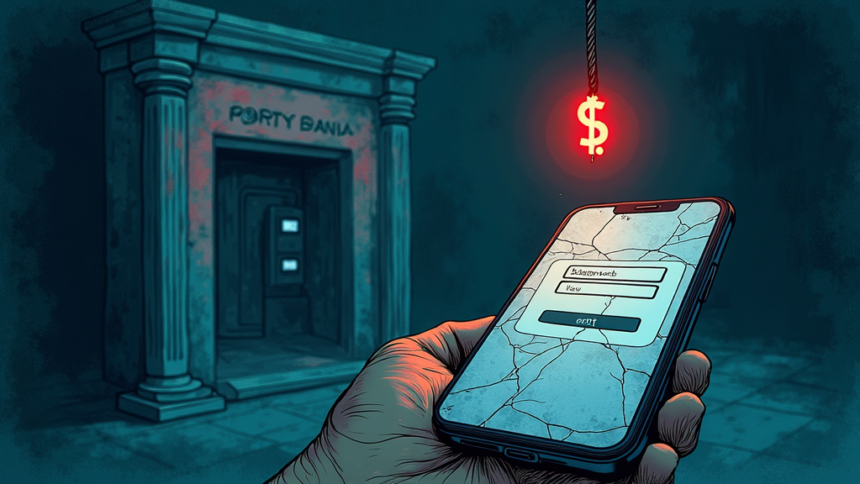
Financial institutions have long depended on one-time passcodes (OTPs) delivered via SMS as a cornerstone of account authentication. However, this method is becoming dangerously unreliable. Fraudsters are increasingly exploiting known weaknesses in SMS verification protocols to intercept codes, enabling account takeover and payment fraud schemes. As attackers become more sophisticated, the simple OTP has transformed from a security asset into a primary attack vector.

Contents
The Collapse of OTP ReliabilityImpact and Scope

Instead of targeting passwords alone, modern fraud campaigns exploit gaps across the entire identity lifecycle. Traditional security models treat authentication as a single checkpoint at login, but attackers now operate continuously through sessions, transactions, and account changes. The rise of synthetic identities, fake accounts, and AI-powered automation means financial institutions must rethink their entire authentication framework to keep pace with evolving threats.

Impact and Scope

This shift in attack methodology has broad implications for consumers and financial firms alike. Scammers are increasingly bypassing the customer entirely, hijacking digital identities and draining accounts from within rather than luring victims into authorized transactions. Even as banks ramp up defenses, scammers stick to what works, relying on synthetic identities and tried and tested account takeover methods that continue to succeed even in an age of artificial intelligence.

The problem extends beyond individual institutions. Governments worldwide are intensifying anti-scam measures, introducing new guidelines for banks and telecom providers that impose stiff penalties for non compliance. In the United States, the state of New York has sued Early Warning Services, the fintech behind the Zelle network, alleging years of poor cybersecurity and fraud protections. Meanwhile, advanced malware like the Godfather banking Trojan now copies real mobile banking apps into virtual environments on infected phones, representing a significant leap in mobile threat capabilities. Links to specific CVEs found in related research should be checked at cve.org.

Source: Healthcareinfosecurity

TAGGED:Account TakeoverCVE ResearchMobile MalwareRegulatory Compliance
Share This Article
Email Copy Link Print
Previous Article AI Security Demands a New Approach: Context and Runtime Visibility
Next Article Deception Technology and Active Defense: A Strategic Edge in Healthcare Cybersecurity
- Advertisement -

You May also Like

News

Agentic AI Redefines the Attack Surface: Why Traditional AppSec Is No Longer Enough

May 12, 2026
News

Critical Windows Shell Flaw Actively Exploited: Urgent Patching Guidance for Healthcare Organizations

May 4, 2026
AlertsNews

Critical Citrix NetScaler Zero-Day Exploited in the Wild

May 4, 2026
AlertsNews

Salesloft Drift Breach Extends to Google Workspace

May 4, 2026
Show More
MedRisk

The latest in healthcare & medical technology risk
From breaking news to expert analysis, our coverage helps professionals stay informed, secure, and ahead of the threat curve.

X-twitter Youtube Linkedin

© 2026 MedRisk. All rights reserved. Privacy | Legal

Quick Links

  • News
  • Articles
  • Features
  • Spotlight
  • Events
  • Mission
  • Services
  • Contact
Welcome to Foxiz
Username or Email Address
Password

Lost your password?