The Rise of Agentic AI and API Exposure in Healthcare
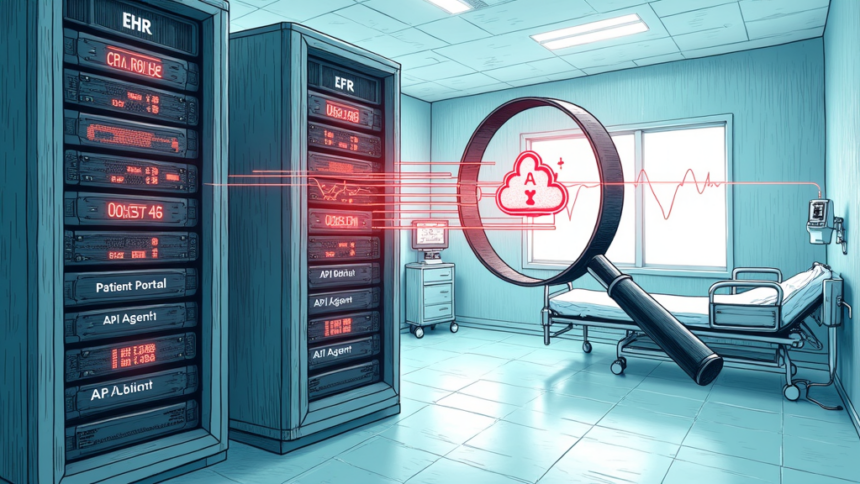
Healthcare organizations are increasingly relying on APIs to connect electronic health records (EHRs), medical devices, telehealth platforms, and patient portals. However, the rapid adoption of agentic artificial intelligence, where autonomous AI agents make API calls without human oversight, is creating a new class of security risks. According to industry reports, 84% of security professionals experienced an API security incident in the past year, and 57% of organizations suffered multiple API related breaches. These AI driven agents introduce high volume, non deterministic execution paths that traditional perimeter defenses cannot effectively monitor. For hospitals and health systems, this means that shadow AI, where clinicians or departments use unsanctioned AI tools that interact with internal APIs, can expose protected health information (PHI) to ungoverned third party services.
Implications for Hospital Security Teams
Healthcare security teams must now treat APIs not as simple connectors but as critical gateways that require continuous monitoring and microsegmentation. Attackers have shifted from classic exploits to abusing large language models (LLMs) and autonomous agents through prompt injection and semantic attacks, which can evade conventional web application firewalls. This is particularly dangerous in healthcare settings where APIs control medical device data flows, patient scheduling systems, and pharmacy management. A compromised API could allow an attacker to alter medication orders or extract ePHI without triggering traditional alerts. Akamai CEO Tom Leighton emphasized that edge defenses, microsegmentation, and dedicated API security strategies are now essential components of cyber resilience for any organization handling sensitive data. For healthcare CISOs, this means deploying API discovery tools to find shadow APIs, implementing strict authentication for all agent to API interactions, and ensuring that any AI tool touching patient data undergoes a security review before deployment.
What This Means for Healthcare Organizations
The convergence of AI agent traffic, bot activity, and expanded API surfaces demands that healthcare organizations rethink their security architecture. Unlike traditional web traffic, AI agents can make thousands of chained API calls per second, making volume based anomaly detection less effective. Health systems should prioritize API security solutions that can inspect the content of API requests and responses for semantic attacks, not just signature based threats. Additionally, compliance with HIPAA requires that any API handling ePHI maintains audit trails and access controls, which becomes more complex when autonomous agents are involved. Healthcare providers should work with platform engineering teams to design API architectures that support predictable AI agent behavior without compromising patient safety or data privacy. As agentic AI becomes more embedded in clinical workflows, from diagnostic support to administrative automation, API security must evolve from a one time assessment to a continuous, real time defense capable of distinguishing legitimate clinical AI agents from malicious actors.
Source: Healthcareinfosecurity