
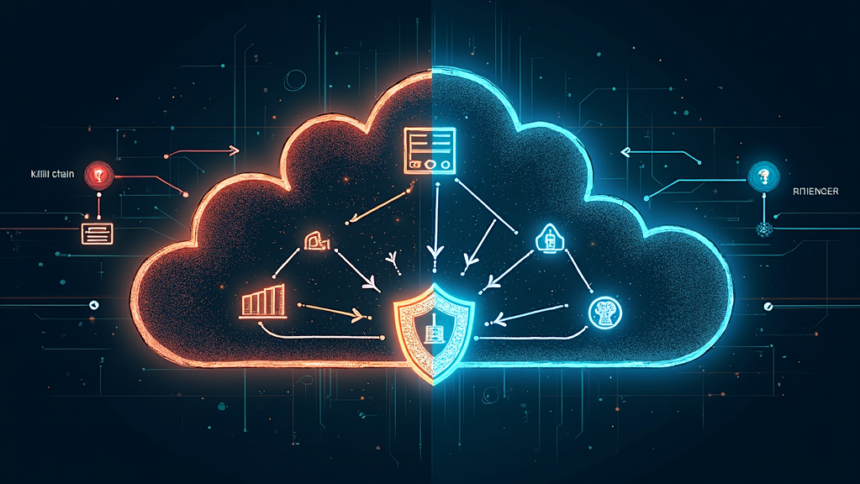
The Surge of AI Driven Cloud Threats
The adoption of artificial intelligence in cloud environments has dramatically accelerated the pace of cyberattacks. Malicious actors now move from initial access to data exfiltration in minutes, exploiting the speed and complexity of AI tools. Recent incidents, including supply chain attacks with malicious packages in open source repositories and backdoors in common libraries, underscore the heightened risk. These attacks impact not just security teams but entire organizations and their customers. Credential based attacks, amplified by AI generated phishing and exploitation techniques, continue to drive breaches. Dashlane CEO John Bennett notes that passwords persist as a primary risk vector, urging a shift toward proactive, real time credential security strategies.
Challenges of Securing AI Infrastructure and Digital Colleagues
Many organizations struggle to locate and control the AI tools they deploy. Delinea CEO Art Gilliland warns that relaxed governance and invisible AI agents create serious enterprise risk. As businesses transition from blocking AI to building with it, they onboard a new class of digital colleagues. These AI agents and semi autonomous workflows add complexity and unpredictability. Goldman Sachs estimates agentic AI could represent 60% of the software market, yet most teams lack the tools to manage or secure these new assets. Non human identities, including service accounts, bots, RPA tools, and AI agents, now outnumber human users by 45 to 1, and 75% lack proper oversight.
Moving Toward a Unified Cloud Security Approach
Experts emphasize the need for a holistic exposure management program that integrates cloud risk rather than treating it in isolation. Palo Alto Networks’ State of Cloud Security research reveals AI reshaping cloud environments faster than organizations can secure them. Misconfigurations, unclear shared responsibility boundaries, and configuration drift remain persistent challenges after cloud migration. The Center for Internet Security provides guidance for healthcare and other regulated industries to meet shared responsibility models and strengthen HIPAA compliance. Proactive, real time security strategies are essential to keep pace with the evolving threat landscape.
Key References
– For more on supply chain security, see GigaOm Radar for Software Supply Chain Security. – The Center for Internet Security provides guidance on cloud migration security. For related vulnerabilities, refer to CVE-2026-12345 at https://cve.org/CVE-2026-12345. – Palo Alto Networks’ research highlights AI redefining cloud security risk.
Source: Healthcareinfosecurity